THE PRACTICAL ANSWER
A refined access-control experience depends on the complete opening: the credential, reader, controller, power transfer, lock, door position and exit arrangements. A small reader cannot compensate for hardware that was never coordinated.
The visible reader is only the first decision
A polished lobby can be undermined by a reader mounted as an afterthought, an exposed cable route or a door that needs repeated attempts to latch. The solution is not simply a more expensive reader. Coordinate the architect, hardware schedule and access-control design early enough that the complete opening is considered.
A bespoke approach asks how residents, tenants, employees, visitors and deliveries should move. It defines the convenient authorized path and the accountable exception. Someone who cannot use a biometric reader still needs an appropriate alternative; a visitor should not inherit permanent access just because registration was convenient.
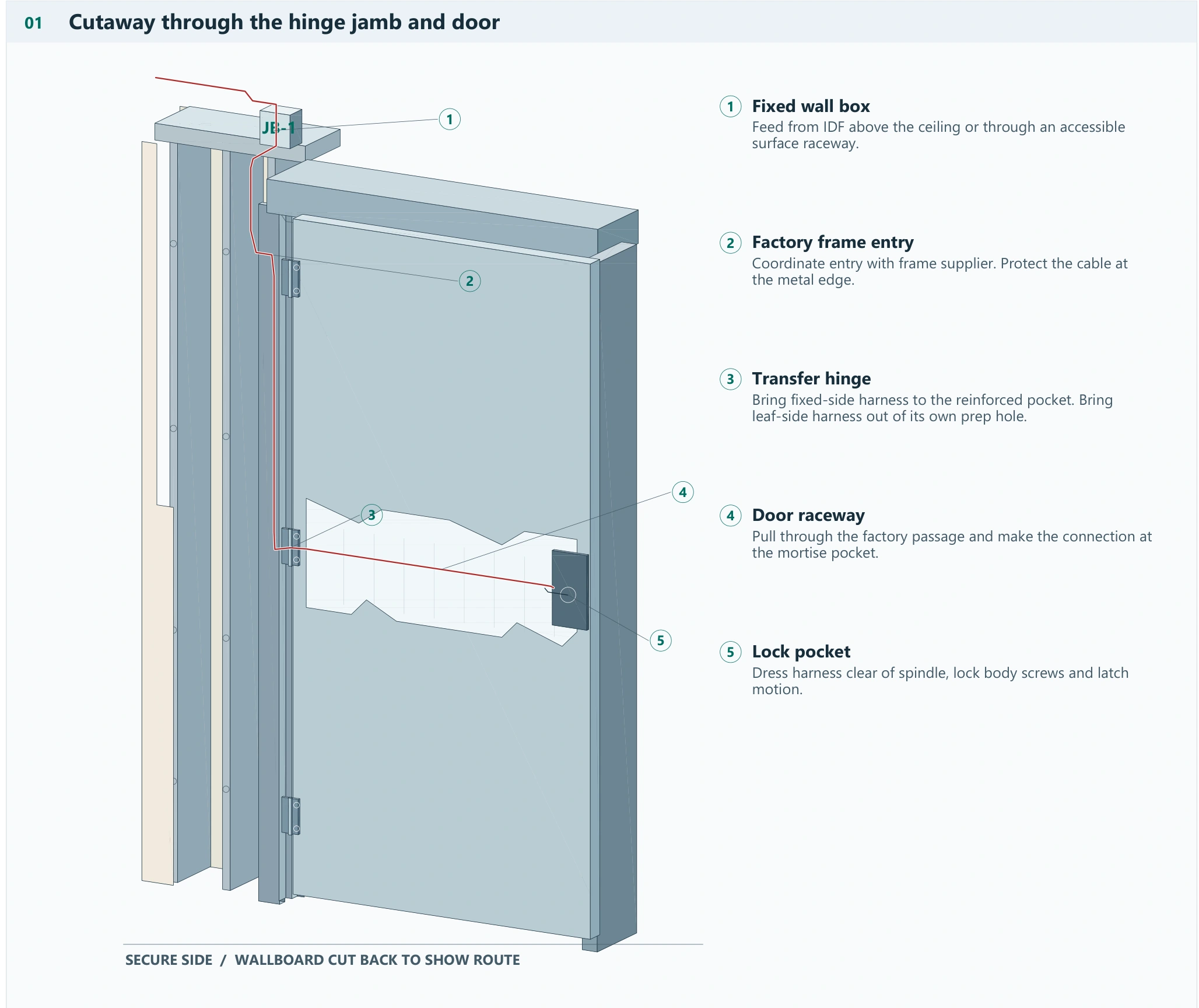
Trace the path from the wall to the mortise lock
The wall-to-frame route, power transfer and electrified lock must work together with the door’s mechanics. Verify the door closes and latches consistently, the system can recognize a held-open condition where specified, and authorized entry and permitted exit behave as designed. Relevant hardware and life-safety requirements should be reviewed with the responsible project professionals.
GreenJay’s anonymized cutaway drawings illustrate that coordination. They explain how the controller, cable path, frame, transfer hardware and mortise mechanism relate. The drawings are examples of integration thinking, not a universal detail to copy onto every luxury door.
Biometrics are an option, not a substitute for design
A suitable biometric option can reduce the need to present a physical credential at selected entrances. Its usefulness depends on the chosen technology, enrollment process, lighting or presentation conditions, fallback credentials and the organization’s privacy arrangements.
AI-supported identity or anomaly tools should be assessed for their actual use case. NIST evaluates recognition in video under varying conditions; that work is a reminder to ask for evidence relevant to the deployment rather than treating all recognition products as equivalent. Do not confuse a video match suggestion with an authorization decision.
Reference: NIST: Face in Video Evaluation
Extend the permission into the elevator
Entry into a building does not necessarily authorize every floor. Elevator integration needs coordination with the elevator contractor, selected controls and the building’s operating requirements. Specify who may reach which destinations, how visitors are handled and what happens during an approved exception or service condition.
A useful operator view connects the access event to the relevant door, available video and the team managing the building. Where supported and configured, analytics can highlight repeated denied entries or unusual activity for review. An alert should direct an authorized person to evidence; it should not silently create a new permission.
What to ask before approving the installation
Ask to see an opening-by-opening plan, an explanation of hardware compatibility and an acceptance test. Test the expected daily routines as well as the exception: a new visitor, a contractor whose access expires, a lost credential and a person who needs an alternative entry method.
For commercial buildings and luxury properties, GreenJay brings the physical hardware and the software workflow into the same conversation. The result should be a smoother experience supported by documented permissions and a maintainable installation.
- Coordinate readers and finishes with the architecture.
- Confirm lock, door, transfer and controller compatibility.
- Test visitor, contractor, resident and staff permissions.
- Define biometric fallback and review access exceptions.
Questions clients ask
Can discreet access control include biometric readers?
Yes, where a suitable product and operating process meet the project’s requirements. GreenJay assesses integration, fallback access, enrollment and privacy considerations before selecting it.
Why show mortise-lock and elevator drawings?
They make the hidden integration understandable: the access decision must operate suitable physical hardware and the correct destination permissions.
Translate the idea into your environment.
GreenJay connects systems, trained personnel and operating procedures around the assignment. Start with the property, people and decisions that need attention.
Discuss this serviceExplore the service