THE PRACTICAL ANSWER
AI creates operational value when it helps a responsible person find relevant evidence and act. A confident-looking alert without context, review and a defined response is only another notification.
Begin with the event you need to understand
A vehicle repeatedly appears near a service entrance. A package record is incomplete. A guard activity entry is unusual. These are different questions, and each needs appropriate data and context. Avoid treating a single broad AI label as an answer to all of them.
Supported camera analytics may classify people or vehicles, identify configured line crossings or help search recorded events. JayShield can organize property activity and assist review of operational patterns. Which functions are available depends on the agreed deployment, integrations and usable source data.
Connect the timeline without inventing intent
A useful workflow lets an authorized reviewer examine the event, supporting video where available and relevant guard, visitor, worker or package records. Consistent timestamps and understandable locations make those connections more useful.
Repeated presence is not proof that someone is conducting surveillance. A missing check-in is not proof of neglect. An alert involving an object is not proof of theft. AI can provide a reason to examine evidence; the operating team remains responsible for a proportionate interpretation and response.
Test the system where it will be used
Choose specific acceptance scenarios and define what a useful result looks like. Test routine activity, difficult conditions and known exceptions. Look at both missed events and nuisance notifications. A demonstration dashboard should not be mistaken for a measured outcome at a different property.
NIST’s AI Risk Management Framework promotes attention to trustworthy development, use and evaluation. GreenJay’s practical application is to keep the operating objective, evidence quality and responsible reviewer visible throughout the workflow.
Reference: NIST: AI Risk Management Framework
Make the KPI explainable
A property manager should be able to ask what a metric counts, what it excludes and what records support it. A monthly incident total means little without the period, site coverage and reporting process. Changes in staffing or data collection can change a number without representing a change in the underlying risk.
Use the analytics to prioritize review and follow-through. Record what was investigated, which exceptions were resolved and whether changes were effective. That is more useful than a dashboard that looks impressive but cannot support a clear operational decision.
Use actual screens to evaluate the workflow
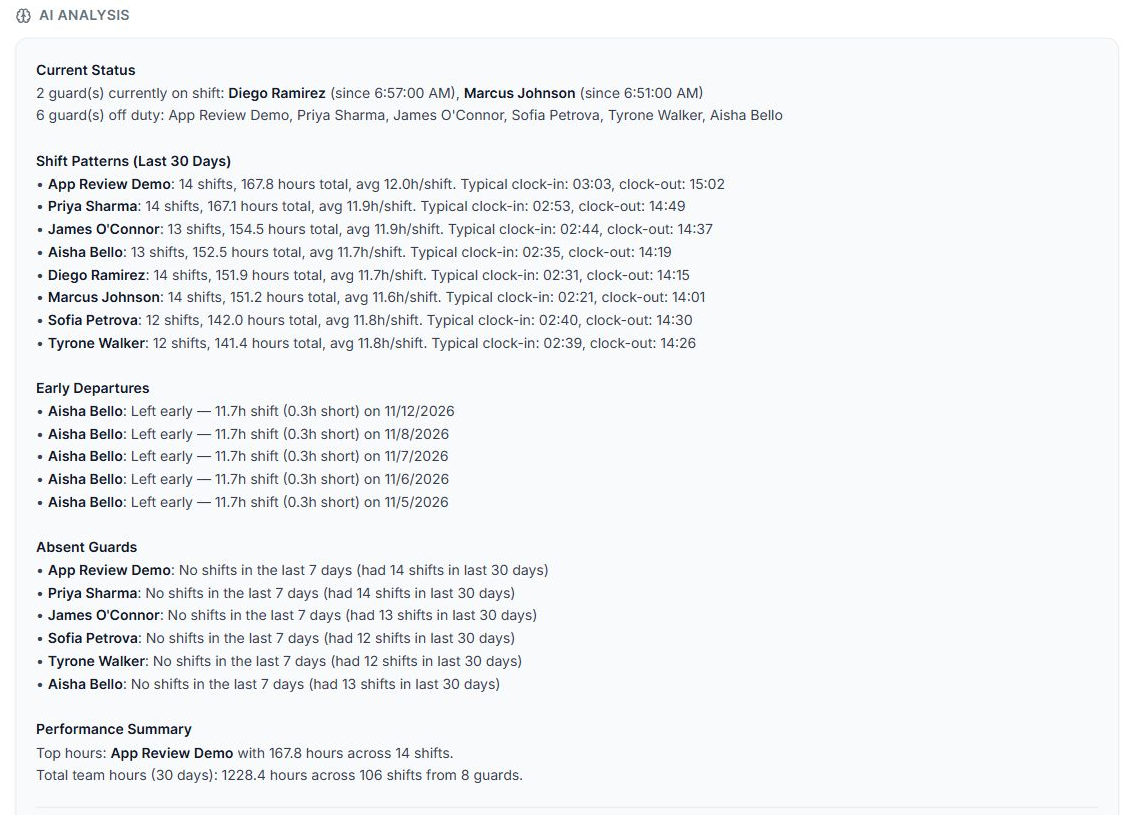
The GreenJay platform page includes large screenshots from the Acme demonstration environment, including AI analysis and alerts. Use them to understand the interface and ask focused questions about your own operation. Sample records illustrate the software; they are not your property’s results.
GreenJay can coordinate JayShield with the selected video management environment, access events and trained personnel within an agreed scope. Start with one important operational question, trace the evidence needed to answer it and identify who will act on the result.
Questions clients ask
Can AI determine whether a person intends to commit a crime?
No reliable claim of that kind is made here. Configured analytics highlight observable events or patterns for human review.
Are the JayShield website screenshots actual customer results?
They are actual software screens from a demonstration environment. They show the interface and sample analytics, not measured results for a prospective client.
Translate the idea into your environment.
GreenJay connects systems, trained personnel and operating procedures around the assignment. Start with the property, people and decisions that need attention.
Discuss this serviceExplore the service