THE PRACTICAL ANSWER
A discreet camera design should be evaluated by the image and operating behavior it provides as well as its appearance. Concealed or retractable hardware needs an explicit use case, suitable integration and realistic acceptance tests.
Start with an architectural and operational conversation
GreenJay’s original retractable-surveillance brief explored how security can fit a luxury interior. The useful starting point is the function the camera must provide and the architectural constraints around it—not a requirement to hide every device.
Some views need to remain available continuously. Others may be appropriate only under a defined operating condition. Clarify the purpose and the privacy expectations before selecting a visible, discreet, concealed or moving assembly.
Understand what is available in each state
A retractable arrangement can introduce different equipment states and dependencies. Establish what the camera can see when concealed, how a deployment request is initiated and what happens if the mechanism or its control path does not operate as expected.
Do not assume an analytics trigger will always recognize the event that should deploy a camera. Where automated control is proposed, verify compatibility, timing, safe behavior and the appropriate manual process. Test the entire sequence rather than evaluating the camera and mechanism separately.
Preserve access for maintenance and adjustment
A concealed installation may still need service, cleaning, adjustment or replacement. Coordinate that access with the architect and contractor before finishes are complete. An installation that cannot be maintained without disrupting the room may be poorly matched to its intended use.
Cabling, power, communications and the selected recording system also need coordination. A clean architectural detail is valuable only when the operating team understands its limitations and the relevant system can be supported.
Choose a bespoke detail for a specific requirement
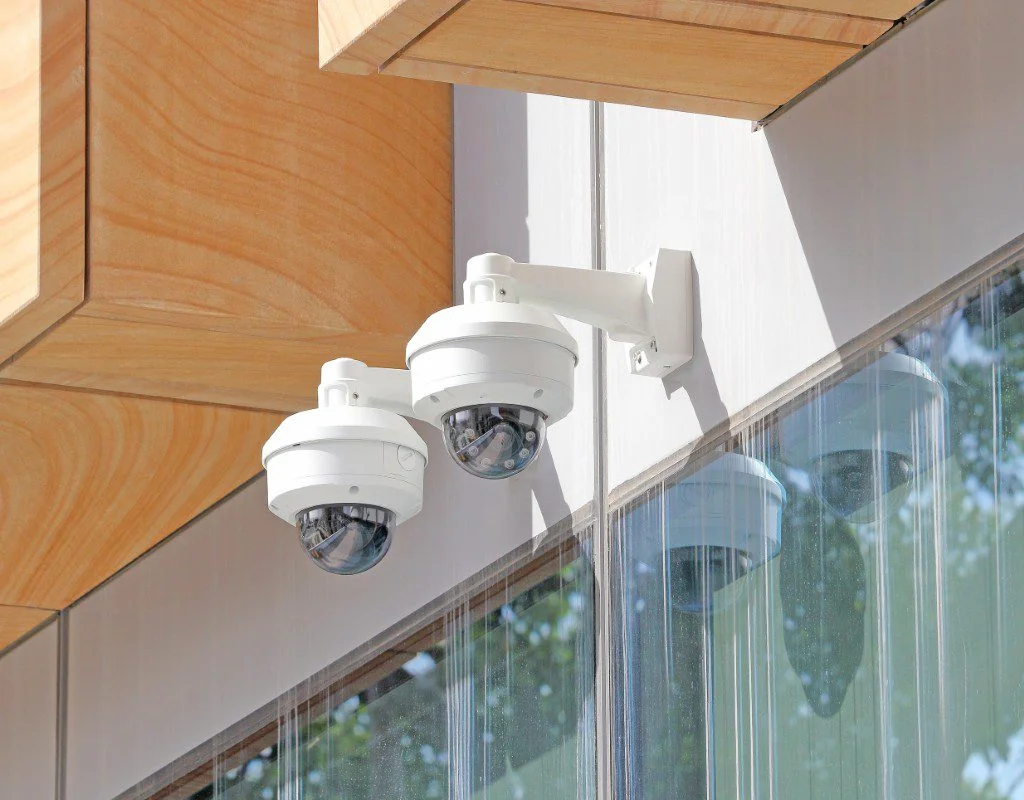
The field image used here shows installed cameras; it is not a photograph of a retractable mechanism. An actual project proposal should identify the equipment and architectural detail being offered, with clear drawings and acceptance criteria.
GreenJay can assess discreet surveillance as part of the wider property design. Compare useful coverage, appropriate privacy, finishes, maintenance and response requirements before deciding whether a moving or concealed solution is justified.
Questions clients ask
Should every luxury-property camera be concealed?
No. Placement and appearance should follow the operating purpose, relevant privacy requirements and the architectural design.
Can an AI trigger guarantee that a retractable camera deploys in time?
No. Any proposed automatic sequence requires appropriate integration, acceptance tests and a clear understanding of its limitations.
Translate the idea into your environment.
GreenJay connects systems, trained personnel and operating procedures around the assignment. Start with the property, people and decisions that need attention.
Discuss this serviceExplore the service