THE PRACTICAL ANSWER
Communications planning should establish who needs connectivity, where it is required and what happens when the preferred path is unavailable. A distributed antenna system is one possible component, not a universal cure for every coverage problem.
Measure the requirement in the actual building
GreenJay’s original cellular-coverage brief focused on an easily overlooked problem: a refined or hardened building can still have areas where expected communications do not work well. Begin with a site assessment rather than assuming a device that works at an entrance will work throughout the property.
Identify the users, relevant locations and functions. An executive’s ordinary mobile use, a guard’s operational communication and a camera’s data connection are different requirements. Define what must remain available and under which operating conditions.
Select a suitable approach with the right project partners
A distributed antenna system, appropriate cellular solution or another connectivity design may be considered after assessment. Compatibility, the selected service, building conditions and applicable installation requirements need review by the responsible specialists.
Coordinate equipment, cable routes, maintenance access and architectural finishes early. Do not buy around a floor plan alone or assume an attractive product specification establishes coverage at the actual property. Test the system’s intended functions where they are needed.
Plan an alternative without claiming every path is independent
If a particular communication function is important to the operating plan, identify what the team should do when it is unavailable. Evaluate the dependencies behind the proposed alternatives: shared power, shared network infrastructure or the same service provider may matter.
The original GreenJay doctrine refers to Primary, Alternate, Contingency and Emergency planning. Applied as a design discipline, that means explaining the fallback and practicing the relevant handoff. It does not mean that naming four paths automatically creates resilience.
Connect field engineering to the wider program
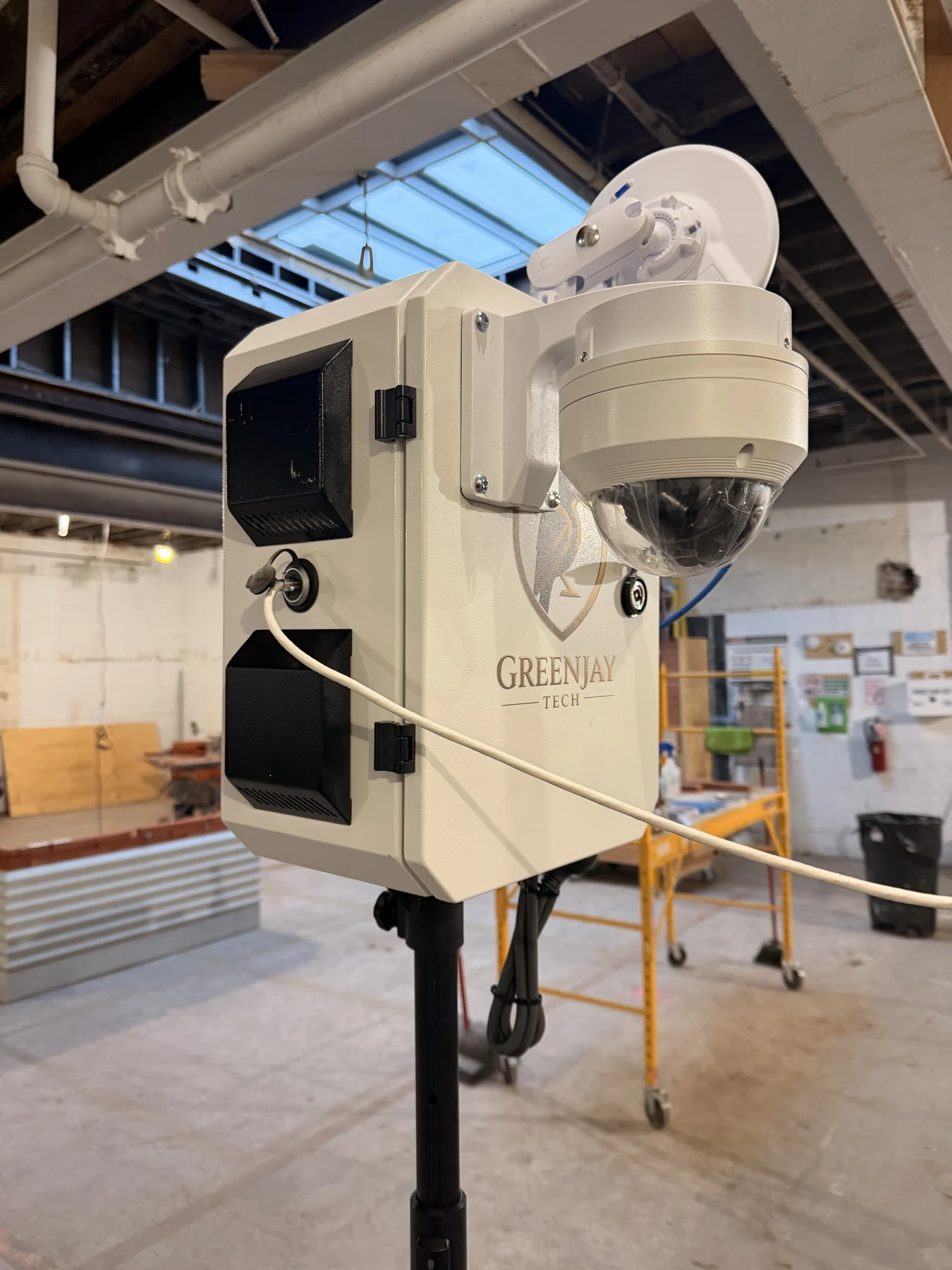
GreenJay’s real construction-site enclosure demonstrates the need to consider communications alongside camera integration and power. A permanent luxury or commercial property needs the same coordination, even when the visible equipment is very different.
Bring the requirement, building conditions and responsible operating team into the design. The result should explain suitable connectivity, testing, support and the relevant limitations. Claims about continuous service should be assessed against those documented dependencies.
Questions clients ask
Will a distributed antenna system solve every mobile coverage issue?
No. Suitability depends on the service, building, equipment, installation and tested operating conditions.
Does having two connections guarantee resilience?
No. Shared dependencies and actual failover behavior must be assessed and tested.
Translate the idea into your environment.
GreenJay connects systems, trained personnel and operating procedures around the assignment. Start with the property, people and decisions that need attention.
Discuss this serviceExplore the service